THE ARCHITECTURAL PALIMPSEST: RITUAL, RENEWAL, AND CRITICAL CONSERVATION
By Samidha Pusalkar
Modern conservation theory is predominantly informed by a Western material ontology that privileges original fabric, age-value, and expert authority. Articulated through influential charters such as the Venice Charter (1964) and institutionalised within global heritage frameworks like UNESCO, this paradigm equates authenticity with the physical continuity of historic material. Within this model, conservation is conceptualised as the stabilisation of the past, preserving tangible remnants of a specific historical moment and protecting them from alteration.
However, living heritage traditions in South and East Asia challenge the universality of this paradigm. Practices such as Jīrṇoddhāra in India and Nepal, the Korean concepts of Wonhyeong and Jinjeongseong, and Japan’s ritualised rebuilding tradition, Shikinen Sengu, articulate fundamentally different understandings of conservation. In these contexts, preservation is anchored not in the permanence of material fabric but in the continuity of ritual, communal participation, and the enduring ‘spirit of the place.’ Architectural renewal, rather than undermining authenticity, serves as the principal mechanism for its maintenance. These traditions reveal a foundational tension in contemporary heritage discourse: if the physical components of a structure are repeatedly replaced, does its identity persist? More critically, can renewal itself be recognised as a legitimate mode of conservation rather than a deviation from it?
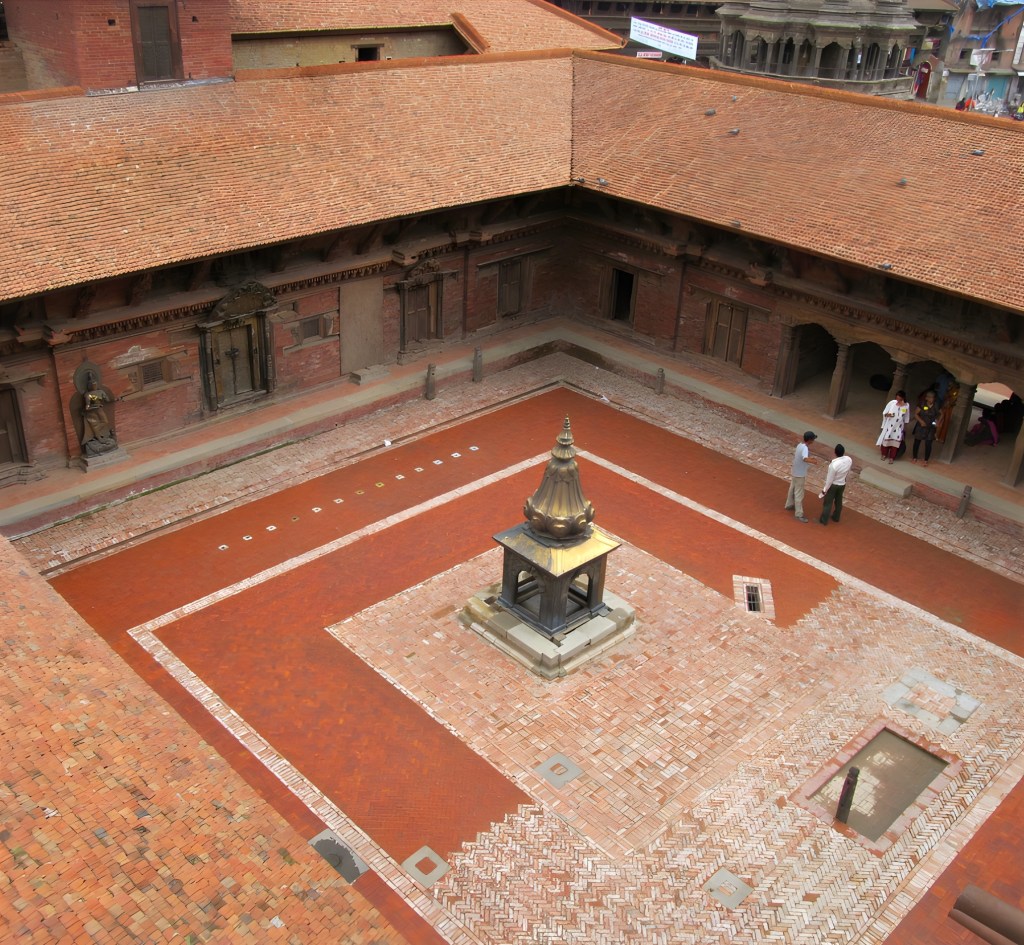
This research frames renewal-based practices not as cultural exceptions or merely ‘cultural practices,’ but as alternative conservation ontologies with the potential to reconfigure dominant theoretical frameworks. By examining traditions of ritual rebuilding and material replacement in India and Nepal, with comparative references to Korea and Japan, the project aims to reconceptualise conservation expertise. Rather than being the exclusive domain of professional conservators and heritage institutions, heritage authority is understood as a shared field negotiated between experts and the communities who inhabit, maintain, and ritualise these spaces. From this perspective, architectural heritage is redefined as a living palimpsest, in which the continuity of meaning is sustained through cycles of physical transformation.
Two ideas shape this inquiry. The first is the well-known ‘Ship of Theseus’ paradox. Philosophers ask if a ship, after every plank is replaced, remains the same ship. In Western philosophy, this is usually an abstract question about identity. In renewal-based architectural conservation, it becomes a material and cultural issue. South and East Asian temples often experience centuries of repairs and reconstructions. The entire site is renewed, yet its identity is preserved. Here, the ‘ship’ remains not because the materials persist, but because its meaning continues. Rebuilding keeps the original ‘spirit’ alive. This research uses the Ship of Theseus not as a puzzle to solve, but as a guide to understanding renewal as an alternative to authenticity.
The second conceptual pillar is the notion of the architectural palimpsest. Traditionally, the palimpsest refers to a stratified accumulation of material layers: successive periods leave visible traces upon a structure, creating a sedimented record of time. Conservation practices rooted in Western frameworks often aim to stabilise and interpret these layers, seeking to preserve a particular “moment of truth” within the historical stratigraphy. This research, however, radicalises the metaphor by shifting attention away from purely material accumulation toward a more dynamic understanding of architectural collage. The heritage site becomes a living manuscript, a living palimpsest, composed not only of stones and timber but also of rituals, repairs and communal memories. Materials from different eras, replacement elements, and new inscriptions coexist, forming an architectural composition in which continuity is produced through transformation rather than resisted by it. The “spirit of the place,” in this framework, emerges from the ongoing interaction between physical renewal and cultural meaning.
To operationalise this theoretical proposition, the research treats renewal traditions as conceptual laboratories through which conservation theory can be critically re-examined. The first centers on Jīrṇoddhāra in India and Nepal, where decay (jīrṇa) is not valued as historical authenticity but understood as a call for ritual renewal (uddhāra); architectural replacement thus becomes an ethical and sacred obligation, and continuity is maintained through repeated acts of reconsecration rather than the survival of original material. A parallel perspective emerges in Korean heritage discourse through the relationship between Wonhyeong and Jinjeongseong. While Wonhyeong prioritises the restoration of an archetypal “original form” often through material replacement, Jinjeongseong frames authenticity as a matter of sincerity and ethical fidelity to cultural meaning, together grounding conservation in both form and moral intention. Similarly, Japan’s Shikinen Sengu tradition institutionalises cyclical reconstruction, in which periodic rebuilding transforms architecture into a recurring ritual that transmits craft knowledge, sacred temporality, and cultural identity across generations. Taken together, these traditions reveal a striking contrast with the stratigraphic model that dominates Western conservation discourse.
Methodologically, this research engages with these traditions by convening traditional artisans, such as sthapatis, shilpis, and Japanese miyadaiku carpenters, alongside scholars and heritage practitioners. The study aims to map how the ‘spirit of the place’ is conceptualised by those who actively sustain these sites. These engagements will investigate which elements of a structure’s architectural collage are deemed essential to communal identity and which may be altered without disrupting continuity. In addition, the research proposes participatory mapping and observational fieldwork at sites undergoing renewal, with the goal of documenting how communities integrate new architectural interventions into the evolving narrative of the site.
The outcomes extend beyond theory. By highlighting renewal traditions, this project calls for a change in heritage thinking: from layers to actions, from things to processes, from expert to shared authority, and from static sites to living palimpsests. It opens heritage to many cultures, where authenticity can exist in acts of renewal and shared memory.
To share these insights, the research will result in varied work that connects academic study with visual and practical documentation. The main result will be a curated architectural research portfolio, organised as a short book. This book will show the sites studied as “living palimpsests,” using photos, drawings, surveys, and infographics to show how material changes relate to cultural continuity. Alongside the book, short videos will showcase the rebuilding process, craftwork, ceremonies, and community voices keeping heritage sites alive. Traditional academic methods, such as peer-reviewed papers, conference presentations, and workshops for policymakers and heritage professionals, will supplement these outputs.
This research argues that renewal traditions are not deviations from conservation norms but valid forms of heritage care grounded in distinct philosophies. By rethinking them as architectural palimpsests, the project aims to broaden dialogue on critical conservation within global heritage.
 Center for Critical Conservation